Showing posts with label review. Show all posts

Saturday, 18 December 2021

Video game review #9: Judge Dredd: Dredd VS Death

 So its been just over 8 years since my last dedicated video game review? That's long enough right? Yeah not too bad.

Then again, consistency has always NOT been a characteristic of my timing on this blog so what's the harm in reviewing a long-forgotten FPS game based off of a much-loved sci-fi franchise?


Judge Dredd: Dredd VS Death is one of those little gems that, while maybe not leaving a huge overall impact on the gaming industry and the scene of FPS titles, still deserves credit as a fine example of simple gameplay and simple storytelling creating a compelling and enjoyable experience.

The Judge Dredd comics that are part of the 2000AD comic series and first published on 05/03/1977 have become the hallmark for action-based comics with dark and adult themes. The comics have rightfully earned their place as some of the most seminal in the medium and even spawned two films; a terrible but nonetheless fun cheesy popcorn flick in 1995 starring Sylvester Stallone and a 2012 film starring Karl Urban in a more faithful and grittier adaptation of the comics.

In terms of tone and style, I'd say that this 2003 first-person-shooter video game is somewhere between the two movies. It has a fair bit of grimdark, grit and realism that can be found in the 2012 movie but also the theatre, one-liners and set-piece moments of the 1995 movie. 

While the atmosphere is a good balance between grit and cinema, the actual gameplay is a lot more consistent. The shooting has a decent amount of impact but there isn't as much variation in the weapons as you'd expect from an early-2000s FPS. You get a selection in this game from a pistol, a rifle that doubles as a sniper rifle and assault rifle, two different types of shotguns, a laser rifle and a laser pistol that is about as powerful as a newborn kitten and a strangely ineffectual grenade launcher. The real standout though is the Lawgiver pistol which is a seminal part of the Judge Dredd mythos as it is a multi-weapon handgun that is linked to the biological ID of it's registered user who has to be a Judge like Dredd. It's easily the best weapon in this game showcasing a rapid-fire mode, heat-seeker bullets, armour-piercing rounds, immolating fire bullets and the one-solution-solves-all-problems that is high-explosive rounds. I quite honestly never found any need to use anything other than rapid-fire and high-explosive rounds on the lawgiver which is a bit sad as I would've liked to see more set-pieces where I was forced or inclined to make better use of the lawgivers' alternate fire modes. As it is, the gunplay still has a good bit of impact and you do really feel like you're an all-conquering law judge in Mega City One.  


Outside of the shooting, the gameplay is pretty straightforward and while it doesn't have the sleuthing segments of the James Bond PS2 games or the physics puzzles of Half Life 1 & 2, it does have a simple formula that is undeniably compelling and enjoyable. depending on where you are, you'll be facing gangs corrupting the underbelly of the city or a mix of vampires, zombies and death cultists bringing about untold destruction to the innocents of your city. With the more human enemies, you can capture them and sentence then to time behind bars or you can shoot your way towards justice and a safer Mega City One. The way the simplicity of that gameplay finds itself to be so compelling is by doing just a couple of things for the fundamentals of the game but making them as accessible and rewarding as possible.

That's not to say the gameplay is flawless though, I can imagine that some people will yearn for something with a bit more variety. However, the game is only 5-6 hours long with the single player in mind so its not like you'll be playing long enough for this to become an issue. The other main problem I had with the gameplay is that the civilian AI is impossibly janky and stupid. On one level in a mega mall, I had to rescue civilians being attacked by zombies in a nightclub. The civilian AI would follow me wherever I went but their natural pathing was so one-note and unintelligent that when they came to the 'specified safe zone' they'd horizontally line up. But if I led all of them in at the same time or walked centrally to the escape exit then the last of the survivors would get stuck behind the line of other civilians and the game would refuse to register me completing that objective. This definitely happened at least two more times thus forcing me to do minor restarts. Its not a total gamebreaker, but the AI is possibly the weakest fundamental part of the gameplay. 

The visuals are also another possible downside. They don't look like excremental doggy chowder but its not the most handsome game either. I gather they were probably going for a similar cartoon feel to the comics but its presented in a much less seamless way here. The design isn't the problem but the graphics and how said design is implemented has certainly aged chunkily in a visual manner. That being said, while the graphics have aged poorly, there is a definite rough charm to them and the game feels like a game of its time as a result of that in the best way possible.


So while the game is a little bit imbalanced, it is fun in a refreshingly simple way. So what's the story like? Again, its pretty simple but definitely mixed with a bit more complexity. It does help to have read a little bit into the mythos of the Judge Dredd comics but its not entirely necessary. In this game you have to deal with a death-worshiping cult who are trying to release the four demonic 'dark judges' who are perverse and dark parodies of Judge Dredd and his colleagues who come from a dead parallel world that is a dark parody of Earth after all life has been exterminated. The dark judges work off of the basis that living itself and consuming the resources that the world needs to operate is a crime and they aim to judge every living being by killing them. Its grimdark in its purest sense and ties perfectly into the ethos of a 2000 AD-type comic. What gives a good bit of narrative juice to the concept of the four dark judges is that they are loosely based off of the four horsemen of the apocalypse with Judge Death being marked as guilty by the hall of judges of not only murder (well duh) but also genocide and bloody omnicide (where you are found guilty of wiping out an entire species in a process that may also result in your own death). So yeah, I think the stakes are pretty high.

Throughout the game you're working towards the overall goal of stopping the dark judges from gaining fully material forms so they can enact their full powers with the aim of ending all life on earth. During the Necropolis event in the comics, the dark judges were able to turn Mega City One into a city of the dead by murdering 60 million of its occupants. With hints to their previous exploits in the lore being fed through character's basic reactions to their presence as well as chapter title cards, you get a well-balanced sense of just how dangerous and threatening the judges are. Considering they can kill you pretty quickly in the game (with the exception of Judge Fear), the dark judges hold an immersive sense of threat and magnitude that draws you into the story by the sheer magnitude of their evil and just how much they need to be stopped.

This game overall is like a cheeseburger, its simple and you know what you're getting in for but the key here is in the execution in the ingredients. Yes its a cheeseburger, but its a great cheeseburger in a seeded brioche bun with A1 Wagyu beef and lamb fat with top-tier gouda and cheddar as well as some artisan gherkins and dry slaw along with homemade burger sauce and bbq sauce along with a side of traditional Belgian fries that have been triple-fried. This game isn't super complicated but it doesn't need to be. Be it something wholesome and kid-friendly or something bloody and grimdark, you sometimes just need a simple injection of fun.

Gameplay 8/10
Story 6.75/10
Graphics 5/10
Soundtrack and sound design 8.5/10
Fun factor 9/10

Fundamental/overall/objective score 7.5/10

Tuesday, 9 April 2019

Ted's film reviews: Army of Darkness (released 1992)

Image source: https://www.imdb.com/title/tt0106308/mediaviewer/rm2861960192


Today we have an action film classic that has undeniably and fully deservedly earned its status of being a cult-classic amongst its contemporaries of the genre and when it was made.  However, much like a number of other classic action films and similar media from the 1980s and 1990s, while the quotable bits and iconic scenes have earned their referential icon status, the weaker bits of the film are forgotten about and don't rear their ugly head until you actually watch the piece of media in question.  Ladies and gentlemen, that piece of media of the day is the 1992 cult hit Army of Darkness starring the almighty chin man that is Bruce Campbell.

Made on the back of the two enormously successful and cheaply-made Evil Dead films (released 1981 and 1987), Army of Darkness was a bit of a departure from its predecessors in that it was the first entry into the franchise with a definitively large budget.  Part of the appeal of the first two movies is that, much like a lot of Quentin Tarantino's earlier work, a lot was achieved on a low budget via creative cinematography.  While a similar sense of cinematography being used to cover up the cracks is present in Army of Darkness, it doesn't really feel as genuine or even as effective considering the higher budget and production quality compared to the previous movies.  That isn't to say that the film is bad in terms of the cinematography but I feel that it should've either gone whole hog for being a low-budget skimmer of a movie or a full-blown blockbuster.  Not to say that finding a middle ground in this regard is impossible but that in the case of this movie, it felt a bit over-ambitious on the part of the filmmakers to try to this extent. 

But, as theoretically lopsided as the movie might be, this aspect doesn't ruin the whole meal rather just a small part of it and thankfully, this doesn't take away from the delightfully simple plot.  After the events of Evil Dead II, Ash (played by Bruce Campbell) is transported back in time to a highly fictionalised past where two warring kingdoms are spilling each others blood in the medieval era all while the land is being ravaged by an army of undead monsters and daemons being led by a malevolent undying king.  After proving that he has what it takes to be the hero to retrieve the foul book that is the Necronomicon to reverse the curse placed on this begotten land, Ash is handed his trademark chainsaw arm and sawn-off shotgun before setting off to claim the book for his newfound friends and hopefully find a way back to his time and home.  Through some inevitable hijinks however, the evil king is not immediately defeated and Ash is tasked with fighting off a demonic invasion and uniting the two warring kingdoms while still struggling to survive.

Its a real classic tale format of a badass outsider being plunged into unfamiliar territory that you somehow know, even with that hero's limited knowledge, that they'll deal with like they're poaching some eggs.  This basic tale is spiced up with a, what was at the time modern and topical hero with similarly natured technology, character who acts as a contemporary audience proxy and through a mixture of wit, dumb luck and having A SAWN OFF SHOTGUN, is able to win the day, get the girl and say some memorable lines that live on in movie pop-culture history.

With such a simple plot, one would suspect that the quality of the film throughout isn't much to talk abut especially considering the earlier discussion about the thematic inconsistency with the other films.  Thankfully, the quality of the acting is such that this doesn't really matter and this is supported by some refreshingly simple script writing.  I do like complex acting performances and screenplays as well as scripts but sometimes, while you might fancy a steak tartan, you may also fancy a humble and simplistic beef burger.  The cast and script seem to know from the offset that they're not creating something too deep or 'high art' and as a result they just relish in having fun making a dumb, cheesy and endearingly plain and simple popcorn flick.

Again, as mentioned above, the film is far from perfect.  The acting isn't amazing across the board and Bruce Campbell is the only one who is good throughout the whole movie and the thematic pacing does feel a bit wonky.  Not to mention, the introduction of the main villain feels a tiny bit contrived and its not always clear what the rules are of the new magic and swords world that Ash is adventuring in.  But, as similarly mentioned earlier, the enjoyment factor of the film is quite high and even if you don't ignore its faults, you can still enjoy Army of Darkness as a bit of good old dumb fun.

Camerawork/cinematography: 5.5/10
Writing/screenplay: 6/10
Acting: 7/10
Direction: 7/10
Personal enjoyment: 9/10

Thursday, 14 March 2019

Ted's film reviews: Alien (Released 1979)


Image source: https://www.imdb.com/title/tt0078748/mediaviewer/rm2990766080 

I guess, considering how long it has been since my last blogpost, that I should apologise for not having uploaded anything here in a while.  And while I am sorry, I guess it makes a certain amount of sense considering how many years came between the subject of today's review and its sequel.  That's because the film being reviewed here is the seminal sci-fi horror masterpiece Alien (1979) which for a while was considered something of a lone diamond in the rough until its equally venerated sequel Aliens came out 7 years later.

Thankfully, unlike a lot of film series where the second movie is regarded more highly than the original (see the original Star Wars trilogy (1977-1983)), Alien is on a similar if not equal level of quality as its 1986 sequel albeit for different reasons.  Whereas Aliens is one of the most important action films of the late-20th century with the film influencing many other properties in action moviedom as well as shooting-based video games, Alien has a more central importance to the idea of horror fiction in film particularly more so than the movie does to any other medium.  You only really have to look as far as Event Horizon (1997) as proof of this.  Yet despite Aliens having more of an immediately obvious cultural impact on the wider scape of popular culture and films specifically, I would still say that both films are at least as good as one another in terms of their quality.

And whereas Aliens has its strengths mainly in its pacing, set pieces and action scenes, Alien seems to get the majority of its praises from its atmosphere-building, sense of suspense, acting and the very-impressive-for-its-time practical effects.  Thankfully, these points of praise are very well-founded as we'll discuss in a bite but first, THE PLOT!

Image source: https://www.imdb.com/title/tt0078748/mediaviewer/rm2611876352 

In the far flung future, humanity has breached the stars of our galaxy and begun to delve into space exploration where explorers are stored in cryogenic pods to survive long trips and wherein these very trips are funded not by governments and space agencies but by private paramilitary corporations.  This is not the hopeful world of exploration seen in the Star Trek franchise but one where humanity barely escaped its own atmosphere and where the crews of many explorations are expendable to companies like the Weyland-Yutani corporation who, in particular, are the ones funding the expedition at the centre of the plot of Alien.  When the film begins, we see the crew of this expedition, including the main character Ripley (played brilliantly by Sigourney Weaver) waking up several weeks early from their destination after having been frozen in cryogenic sleep.  Upon waking, Ripley, along with the rest of the crew of the spaceship Nostromo are alerted to a distress signal and upon finding its location they also uncover a colony of alien-looking egg chambers.  After their detour to this place, the crew go back to the ship and head on their way before quickly realising that they have a murderous and most unwanted guest on their ship.

What I like about the plot, much like a number of seminal action or sci-fi films from the late-1970s to early-1980s, is that the overall concept is rather simple.  No introspective deep thinking in the overall plot, rather the main concept of the story itself is kept as simple as possible meanwhile any philosophising, what little there is, is left up to the people in the movie for character-building moments.  And Alien has a load of these moments such as when the nature of a conversation between the crew about exploration and safety protocols indirectly brings up the drudging prospect of living a sterilised and entirely-for-profit lifestyle under a corporation like the previously-mentioned Weyland-Yutani.  Thankfully, as interesting as these character moments are, they aren't too plodding or overly-frequent to distract away from the action and are instead used to carefully set up a sense of false-security before the eponymous alien explodes into the movie and wreaks havoc.  

Once this period of atmosphere-building is done and dusted we're then made all the more aware of the other two main strengths of the film in the form of the acting and decent, at least for its time, practical and special effects.  The acting in particular is kind of a given towards its high quality when you consider how many spectacular actors and actresses performed on the cast here including Sigourney Weaver, Tom Skerritt and John Hurt.  However, what makes the spread of acting performances so good in this film isn't just the talent amongst the cast but the casting itself specifically.  Weaver, as young as she was in 1979 was easy to take as the scared but pragmatic Ripley while Hurt is enthralling as the wary and weary Kane.  Seriously, whoever was in charge of the casting for this movie, I hope they got a bottle of whiskey and a box of truffles.

Image source: https://www.imdb.com/title/tt0078748/mediaviewer/rm3452767744 

And the same really has to go for the team who worked on the special and practical effects.  I won't talk too much about it because the practical effects in particular are key to the first big reveal/plot twist of the film involving John Hurt.  However, even though you hear it said about a large number of famous films made around the same time as Alien, it is no less true for this classic.  I feel sometimes that while it hasn't fallen off the map, practical effects isn't as much of a seminal art of sorts in modern cinema as it was in 1979.  Some features like Dunkirk (2017) and Mad Max: Fury Road (2015) do seem to be reviving this underappreciated art and I am eternally grateful for that.  However, if you want to see an example of practical effects in their prime and at their most creative, watch Alien and you will not be disappointed.

Overall, the film is a classic, there really is a sense that all of the legendary praise heaped on this feature is thoroughly deserved and totally not unwarranted.  Its a peculiar situation where, even though I would not say the film is perfect due to some of the acting being sub par and direction at times being run of the mill, I would still say this film is an undeniably excellent film and easily ranked amongst all the classics of the sci-fi genre including the films that are indeed perfect.  Conclusion:  watch this film and then watch its sequels pronto.


Camerawork/cinematography: 8/10
Directing: 7.5/10
Writing: 8.25/10
Acting: 9.5/10
Personal enjoyment: 10/10


Tuesday, 13 November 2018

Film review: Starship Troopers (released 1997)

With the 20th anniversary of this violent sci-fi classic being last year, which also coincided with the release of the animated feature Starship Troopers: Traitor of Mars, I figured now that was as good a time as any to review this bloodthirsty classic.  

Starship Troopers Poster
Image source: https://www.imdb.com/title/tt0120201/mediaviewer/rm611522560?ref_=tt_ov_i


But before we look in-depth at the significance of the film, we must first look at the equivalent aspect of its source material. The original novel that Starship Troopers is based on was published way back in 1959 and written by the legendary and ahead-of-his-time liberal writer Robert A. Heinlein. Big man Rob was definetly a unique mind amongst mainstream sci-fi writers in the age of segregation and sexual closetedness in western media in the 1940s-60s. In a stark contrast to some writers of his similar popularity in the mainstream at the time, Heinlein featured a number of storylines with protagonists, and main ones at that, of colour and themes that expressed sexual freedom and liberal individualism. 

In the original Starship Troopers book, we see a proto-facist military society fighting against a bug-like alien army with a force of heavily armoured and mechanised infantry. Throughout this relatively small novel, we repeatedly read about scenes of the higher-ups in this society acting as if their near constant politicking and beaurocratic management is helping to win the war. In actuality, it is the highly trained soldiers in their supremely advanced mech suits that are winning the war with skill and bravery. In a sense, the original book is taking a jab at the beaurocratic nature of such goverments and the actions of politicians in heavily militaristic societies taking credit for advancements and victories that are gained via the efforts of others upon their command. However, there is this running theme throughout the book that war and conflict are intrinsic parts of human nature. This might've been more relevant in the mid-1940s-late-1950s when the nuclear arms race and cold war were really picking up speed in the wake of the Second World War (1939-45) and the Korean War (1950-53). But, in a moment of brutally poor timing for the intended message of the book, the Vietnam war (1961-75) would properly break out a few years later and thus the public perception would change in much of the west towards the national duty to wage war in the sake of liberty. Especially after events like the Tet Offensive (1968), many in places like the USA, Canada and UK realised that gaining liberty and emancipation was possible through less violent means. An interesting and well-written book with a controversial but thought-provoking message indeed. A message with horrendous timing? Absolutley.

Therefore, does the film adaptation made almost 40 years later show any alternations to the original themes and messages of the book and indeed Heinlein's overall ethos that he showed in his writing? For starters, the film does represent a proto-facist and highly militaristic society at war with a bug species known as the arachnids. However there are a few big differences. The first is visually obvious in that the soldiers in the film are used and equipped much more as simple mobile infantry and thus, incur heavy casualties in gruesome fashion. Second, the society that our main characters serve is framed in stark contrast with a decidedly less political and much more satirical edge. Whereas war is seen in the book as a natural part of human nature, the film sees it as one part of our world that we would do well to try and steer clear of considering how much it can damage the younger generations. Considering the carnage amongst the mobile infantry of the Earth Federation during the iconic scene showing the assault on the planet Klendathu, the film can also be seen as making use of the events of the Vietnam War that happened after the book came out as an allegory for that very same conflict. What I mean by this is that the landing of Klendathu scene, on top of being a badass action scene and having an iconic song named after it, is a decent allegory for the Vietnam war; showing a technologically superiror invading army being unanimously humiliated by an arguably more simplistic and less advanced enemy. Case in point, you should not go to war unless it is absolutely necessary and you should also never treat your enemy with no respect.

So enough about postulating and theorising, how good is the film itself? Well, while I think it is very enjoyable I have to admit that it is quite dumb. Quite dumb indeed. Now that isn't the fault of the source material and deeper message of the film which as mentioned above, are fairly intelligent. Rather, this is down to some of the acting and a great deal of the dialogue being a tad over the top and kind of silly. One example is a scene towards the beginning of the film where Casper Van Dien's Johnny Rico and his girlfriend Carmen Ibanez (played by Denise Richards) flirt in the middle of class over an inter-school messaging system. Despite being a decently themed scene, the facial acting of both actors and the way the visuals are designed makes the whole thing cheesier than a plate of Hunters Chicken. Well...to be honest, the numerous romance scenes are all like that. In fact, I would perhaps not centre a war film around romance but rather survival. Although...I would imagine that romance was not a central theme of the original book so it was used as an interesting additional way of showing the distruction of the younger generations through conflict in the film. Admittedly, while the camerawork isn't absolutely sensational, it does the job fine and frames the secenes of particular carnage very well. Same thing goes for the acting too...I guess. It isn't anything on the levels of the peformances seen in Apocalypse Now (1979) but again, like the cinematography it does its job fine enough.

One area where the film peforms really well but perhaps shouldn't is in the soundtrack. I say this because the film mainly centres the soundtrack, without much variation on the song from the Kledathu drop. Now I am not complaining, as said above, it is a good tune for this kind of movie. Furthermore, its only really used in scenes where its really necessary for mood-setting.

In conclusion, I would not expect a great deal of hypothesising in this film or really in-depth conversations about warfare and the destructive impact it can make on the minds of otherwise healthy men and women. Again, if you want a piece of that pie, you really should do yourself a solid and watch Apocalypse Now. Or, I would also point out the interesting way this topic is analysed in other films like Full Metal Jacket (1987) or Wings of Honneamise (1987). Mind you though, Starship Troopers, even if you ignore its background, is still a thoroughly entertaining war film and packs more than enough blood 'n' guts for all you meatheads out there. It certainly has a hearty dose for ol' Ted here. On top of this, the actors all look good, the soundtrack does well enough, the direction is generally pretty decent and it has Denise Richards in it who is always nice to see in a well-dressed military uniform and smiling. I...may have revealed a bit much there but...in any case, watch this film as it is a blast. In fact, watch the animated films Starship Troopers: Invasion (2012) and Starship Troopers: Traitor of Mars (2017) as well as the poorly-aged but still decent cgi cartoon Roughnecks (1999-2000) and ignore the two sequels to the original film and you will have a good summary of this franchise.

Camerawork/Cinematography: 5.5/10
Direction: 6/10
Sound/soundtrack/sound design: 7.8/10
Writing & plot: 7/10
Acting: 5.25/10

Personal enjoyment: 9/10

Friday, 2 November 2018

Batman the Dark Knight Returns (parts 1 and 2) review

Hello there ladies and gentlemen! I know that me disappearing for months on end is kind of a running theme on this blog but its one that I'm really trying hard to do away with.  However, as the old saying goes; the show must go on!

And what better way to introduce this new wave of hope and optimism by reviewing a fine bit of media courtesy of our good friends at the University of Sussex Sci-Fi & Horror Society?

But t'was not a film that we saw this time, or at least one in the commonly accepted sense, but rather a 2-part animated mini-series based on the legendary 1986 graphic novel The Dark Knight Returns by Frank Miller, Klaus Janson, Denny O'Neil and Lynn Varley.

The Dark Knight Returns
The Dark Knight Returns comic book cover: http://en.wikipedia.org/wiki/The_Dark_Knight_Returns


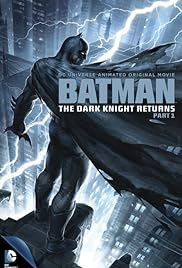
Batman: The Dark Knight Returns, Part 1 Poster

Batman the Dark Knight Returns part 1 cover: https://www.imdb.com/title/tt2313197/mediaviewer/rm2876679936?ref_=tt_ov_i


Batman: The Dark Knight Returns, Part 2 Poster
Batman the Dark Knight Returns part 2 cover: https://www.imdb.com/title/tt2166834/mediaviewer/rm1483283200?ref_=tt_ov_i


To put a long story short, this well-regarded bit of comic book history envisions a much older Bruce Wayne (aka Batman) coming out of retirement after over a decade away from crimefighting to find the fictional city of Gotham being besieged from all quarters and alleys by all manner of curs and vagabonds.  Through the use of tactics that are considerably more aggressive and violent than those used by the Caped Crusader in his previous couple of decades of lore and adventuring, Batman tackles a city-wide gang called The Mutants.  But as this conflict with the dirt of Gothams' society reveals the full extent of Batman's motives and methods, he comes into conflict with the new commissioner of the Gotham City police department as well as his old mate Superman.  Will Batman cling to his position as a hero of the people and the old-fashioned way of tackling crime or bow down to the establishment and their methods?

I'll refrain from describing the synopsis of the film any more than this for fear of spoiling the story for anyone wanting to watch both parts of Batman the Dark Knight Returns.  But, I will say that the main draw of both the book and the miniseries is how it narratively presents a well-established and widely known character in a way that they hadn't been presented in close to a similar fashion since the 1940s.  Between the 1950s and mid-1980s, Batman as a character generally became less violent and aggressive as compared to his classic comic adventures in the 1930s and 40s.  There are a wide number of factors that could form some interesting theories as to why this happened such as the rise of the 'peace and love' movement in the late-1960s and the outcry in American popular media against events such as other violent comic stories and the Vietnam War amongst other similar incidents. There is a general consensus in the analysis of 1980s pop culture in the west that there was a, somewhat brief but nonetheless impactful, rejection of this widespread message in western media in many, albeit not all quarters.  Hence, when watching films like Cobra (1986 starring Sylvester Stallone) or Death Wish 2 (1982 starring Charles Bronson), you're likely to see either some hard-ass rule-breaker or old and weary battle-scarred warrior taking on the 'weirdos' and 'freaks' who had been seen to have infiltrated US or UK society during the 1960s and 70s.  There is an element of this in both parts of Batman the Dark Knight Returns but what makes this reflective theme of tackling social hardships more interesting is that it is presented in this case with a character at the forefront who had spent about 20-25 years going against this trend somewhat before the original graphic novel came out.

So is the story of the miniseries, adapted from the book, any good in a qualitative sense? Generally speaking, I think this is one of the most seminal comic books of all time and both parts of the mini series, released in 2012 and 2013 respectively, adapt from it in a respectful and broadly competent and satisfying manner. The original story of the graphic novel was already an interesting draw from the offset and after that, is well-written throughout.  However, if there is one criticism that you could levy at the miniseries is that the graphic novel it is inspired by is perhaps one of the most of-its-time comics made in a long, long time.  This isn't much of an issue really, but, it does mean that some of the messages from the original comic could've maybe done with being adapted to stay relevant when the social issues facing western pop-culture had changed a lot by 2012-13.  But, to turn back around yet again, it might also be a great testament to this story's long-standing quality and reputation that even in 2012, still resonates just a little bit.

Although not all of the of-its-time stuff in the miniseries should be taken this seriously such as the absolutely baffling scene where Batman does battle with an MP-40 sub-machinegun-wielding criminal henchwoman with muscles to rival Batman's and wearing nothing but combat boots, grey combat trousers and swastika-shaped nipple pasties.

...

Oh you think I'm joking?


Batman: The Dark Knight Returns, Part 2 (2013)
image link: https://www.imdb.com/title/tt2166834/mediaviewer/rm2631477248?context=default&ref_=tt_pv_md_4


Just...WHY?

I know I have some tastes that I might not share with everyone I know or might ever come to know but I think that even in the context of the 1980s this is still bizarre. But alas, wherever there is something that can be marginally sexualised on the internet there is some loony bin doing just that. I can't say I'm all that surprised though, after all, the original Dark Knight Returns graphic novel was released not even 45 years after the 2nd World War (1939-45) had ended so this could perhaps be explained by the cultural hangover from that conflict. This would also explain the populist position that Batman takes on further into the 2-part miniseries and how, while netting him and the people of Gotham short-term benefits, is perhaps not the healthiest approach to solving all of the city's issues in the long run. Then again, Batman is more capable at tackling much of the criminals even this late into his career than a largely bumbling local government. Therefore, I guess how moral his populist takeover of the people's opinions and minds through action later on is down to an individual's own perspective.

But still...that scene with the Nazi henchwoman will never leave my mind.  No matter how much vodka and/or coffee I drink.

I guess that is in no small part down to the art and design of the two-part feature which, like the graphic novel is superb. Batman is large and blocky in his design in stark contrast to many of the slim and agile characters around him giving this contrast of Batman being set in his old, stoic ways as a new way of taking on the evils of the world outpaces him.  Even without this insight, the art is just generally good and isn't too noisy or overdesigned but neither is it too simplistic.  Its not the best I've ever seen in a feature like this but its damn solid and does its job really well.  As does the colour scheme and direction of the film which generally takes a dark hue as much of Batman's activities are undertaken at night. This gives Batman the impression of some brooding, dark and contemplative vengeful demon of the night which coincidentally was just how his character in the comics was starting to become around the time of when the graphic novel originally came out.

Image source: https://www.imdb.com/title/tt2166834/mediaviewer/rm2564368384

So, before we conclude this cavalcade of Batman being awesome we should go onto what I feel is the strongest part of the miniseries. For me, there is no doubt that it has to be the voice-acting.  Maybe its a bit of bias from Robocop (1987) being my favourite film but I have to say that Peter Weller is my joint 1st place favourite incarnation of the character alongside the one in Batman the Animated Series (1992-1995) voiced by Kevin Conroy.  Other solid voice-acting performances throughout the feature come from Ariel Winter who plays a young Batman fangirl called Carrie Kellly who takes up the mantle of the next Robin and Michael Emerson who has a small part as Batman's most iconic villain; The Joker.  Emerson's portrayal of the character isn't my favourite.  But, to be fair, that is in part because the design for the character in this mini-series doesn't really fit the way that he speaks. Emerson's portrayal, as short as it is, takes an interesting approach to the clown of crime by portraying him as more of a slimy schemer than some insane whirlwind of madness with Joker's theme of insanity bubbling more under the surface of his character here.  Everyone does a commendable job though and even the weaker performances are still decent enough and do an above average job at portraying their characters.

So after all is said and done, would I recommend both parts of Batman the Dark Knight Returns?  If you want something that takes a bit more liberties and risks with its interpretation of the source material it might be a better idea to look elsewhere. However, the original graphic novel has a feel to it that screams out for a animated adaptation and while the two-part mini-series really doesn't change much, its still very entertaining.  Yes, the source material might be a bit too of-its-time for some people but this doesn't weigh the overall project down in terms of its intrinsic quality in my opinion.  Even this many years after pen was put to paper to introduce this idea of Batman being a weary but still tough hard old bugger to the mythos of his series, the graphic novel still holds water and its animated adaptation will surely do the same for a while yet.


Acting/Voice-acting: 9/10
Direction & Art-direction: 7.75/10
Soundtrack: 5/10
Action & animation: 7.15/10
Plot, writing & narrative: 6/10

Personal enjoyment: 8.5/10

Friday, 2 March 2018

So bad its good #1: Mindhunters (Released 2004)

Again, as I've said many times before, sorry about not posting anything on this here blog in a while.  BUT HEY!  At least you guys can rely on one thing being consistent here with your (probably) favourite blog!; inconsistency!.

And speaking of consistency, there is perhaps no other form of film I enjoy more than ones which are trying to be profound or good but fail either through lack of skill or sheer ineptitude.  Today's offering truly does fit this bill consistently throughout its runtime and so, again with thanks to the University of Sussex Sci-fi and Horror society for helping me to see this film again, I give you the bountiful gift that is the 2004 underrated horror classic, Mindhunters!


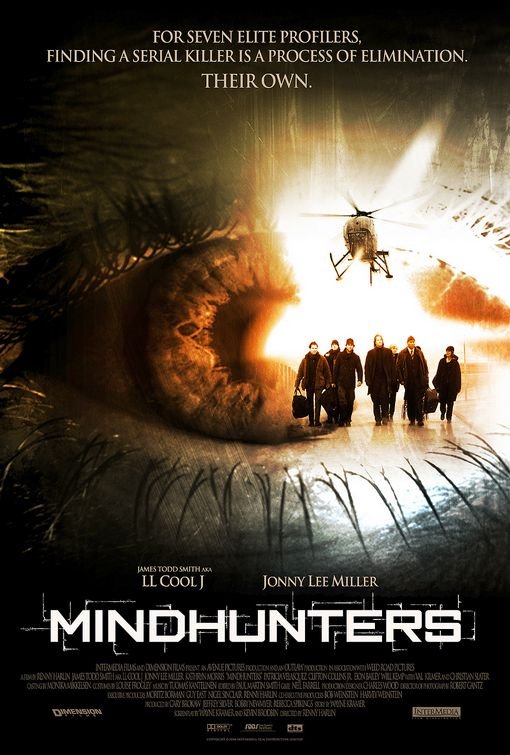
Mindhunters (2004)Image source: www.imdb.com/title/tt0297284/mediaviewer/rm47553792


In all honesty though, I would think that it'd be fair to forgive someone for thinking that they were going into a moderately entertaining horror/action flick at the very least .   The plot is pretty straightforward and should, on a face level, make for decent viewing. 

In the bygone age of 2004 USA, a team of undergraduate junior FBI investigators and profilers are sent by their crime investigation tutor Jake Harris (played by Val Kilmer) to a US Navy seals training facility on a remote island to conduct a mock manhunt for an imaginary serial killer.  However, as soon as Harris leaves and the exercise begins, the investigators are gradually killed off one by one for real by an elusive assassin that the rest of the survivors have to unite against. All this has to be done while the team are all suspecting each other of being the killer and attempting to solve the murders.  This isn't made any simpler for the team by the last minute inclusion on their expedition of federal department officer Gabe Jensen (played by James Todd Smith (aka LL Cool J)) who was previously unknown to the rest of the students.  Can Jensen and the FBI undergrads put aside their differences or will they all be picked off one by one by the mysteriously planned traps that all seem to target one particular team member one at a time?

Now doesn't that just sound like the plot of an underrated classic?  Well in a sense it is because despite having a cast including a few half-decent actors and a nice and simple plot, the narrative, characters and pacing quickly go into a cavalcade of goofy failure.  What really makes me warm to the failures of Mindhunters though is that unlike the vast majority of Uwe Boll's films, this flick wasn't made with a lack of care put into it and in contrast to anything from The Asylum film studio, it wasn't intentionally made to be bad.  Add to this that all of the best actors are given the worst lines, are underutilised or killed off right at the start in combination with considerable incompetence all round and your have a crapshoot of grand proportions.  And its not for a joke either, its all played 100% straight, trimmings and all.

On the point of decent actors being killed off way too early (SPOILER WARNING), Christian Slater is one of the first to go in what is easily the funniest death scenes in the film which is nicely helped along with easily the worst bit of CGI in a film that showcases no good CGI at all.  But while it is perhaps understandable not to make the biggest use of a one-note actor like Christian Slater, you'd expect a seasoned great of the craft like Val Kilmer but instead, the 1990s heavy hitter is just given a small bag of generic lines and is in the film for a grand total of just a few minutes. 

The last gasp bastion of providing a possibility of a good performance would be LL Cool J who, if not a talented actor, always provides warming charisma. Instead, J seems to have been given little to no good direction on top of easily the three most notoriously bad lines in the film (watch the film in full you'll get what I mean).  With the three most promising talents of the cast taken out of commission or improperly used (perhaps less so in LL Cool J's case because he is still able to really sell his lines with passion) you're left with a cast of either walking horror thriller stereotypes or cardboard cut-outs who desperately try (or at least I think that's what they're trying to do) to glean some ironic quality out of the horrendous script, archetypal early-2000s pop soundtrack or lame duck direction.


See the source image
Image source: https://www.horrortalk.com/reviews/40-movie-reviews/291-mindhunters.html


In a strange bit of contrast though, there are some genuinely unironic and true bits of quality sprinkled throughout the movie.  While the CGI sucks major cobblers, the action scenes where some of the CGI can be found are among the only small handful of scenes in the film with any good direction.  The final gunfight between the main character and villain at the end of the film in a ice pool is genuinely gripping. Meanwhile, a scene much earlier in the film where LL Cool J and Clifton Collins Jr both have to work together against the clock in order to save themselves from a hallway filling with electrified water is made truly intense by the score actually being suitable for once and LL Cool J performing some half-decent stunt work along a hole-riddled wall.  The stunt work in general is actually pretty decent and even when the action isn't at its best, such as the fistfight between LL Cool J and detective Harper (played by Jonny Lee Miller), the action scenes are between participants that are only about as tough as one another so no scrap ever feels uneven and has at least a satisfactory level of intensity.

Just note, this isn't anywhere near enough to rescue the film and make it a genuine and unironic 5/10 film experience at least.  But on the flipside, its not like the genuinely good bits of the film highlights the cons of the film and make them worse either. It is true that there was a good deal of potential for this film to be genuinely good but Mindhunters is one of the few bad films where the bits that are genuinely and unironically good make you incur pain from how much better the film could've been. Instead, how I would describe this dilemma of an ironically bad/good film having unironically good bits in it is that in Mindhunter's case, its more like going to a Chinese restaurant near the end of serving hours to have a delicious chow mein and then getting some free fresh leftovers from the kitchen warm out of the kitchen right as you're leaving and as the restaurant is closing.  You didn't expect such a development and one thing is of a higher quality than the other, but its sill very tasty and you're happy to enjoy it regardless.

So to CONCLUDE!  Mindhunters is an awfully made film in an objective sense but is made with such effort and passion behind it that it both gives the film an admirable charm whilst also highlighting the genuinely good aspects of the film. And even when the awful script rears its scruffy head, its usually with a line that you either laugh your knickers off at or can't help but at least give a mirthful smile to.  So would I recommend Mindhunters?  Ironically I would. Definitely in a so bad its good way, you can glean a great deal of enjoyment of this flick while also appreciating some actually decent fight choreography. Do not go into this film with expectations of it being a satisfactorily well-made film or being constantly rip-roaringnly funny throughout, it might sound weird to do that but trust me, you'll enjoy the film all the more for doing so.


 Camerawork/cinematography: 4/10
Directing: 3/10
Acting: 5/10
Writing & plot: 5.5/10
Personal enjoyment: 10/10

OVERALL RATING: 27.5/50

Friday, 1 December 2017

Year-old film reviews #1: Arrival

Ok so I figured that doing a new film review or an old one wouldn't really be suitable for a film that had only just been released a year before.  So, for the types of films and movies that were release around a year or so before I saw them, I've decided to set up this little side-series on this blog to accommodate for such a niche issue.

Anyway, without any further ado, lets get into arguably the most boring sci-fi film of this decade so far!  And yes, I think that Arrival is worse and definitely more boring than Interstellar.

Once again, thanks to the good people at the University of Sussex Sci-fi and Horror society for providing me with the opportunity to see this film.


Image result for arrival film
Image source: https://truereviewsnow.wordpress.com/2017/01/19/arrival-sci-fi-redefined/


As an initial warning, I should mention that the article I sampled the above picture from described this grey mush of a film as redefining sci-fi as a genre.  Considering how that seems to be a phrase surrounding any somewhat artsy sci-fi epic these days I am not entirely convinced or enticed to believe such a statement about Arrival.  At least with Interstellar, while it was mostly boring, there were some aspects and parts of that film that I felt were interesting to study in how bad they were.  There isn't even anything close to that in Arrival sadly.

The concept of the story is great but its tragically let down by dull execution.  With such a potentially juicy concept as humanity trying to peacefully establish communication with extra-terrestrials after their first contact, you'd at least expect the narrative to be interesting.  But alas, not even the story, even with such a promising basis, is anything noteworthy.  Well...unless you count endless shades of boring grey as promising but I would respectfully disagree with you in that case.


Image source: http://mymoviewallpapers.com/arrival-2016-movie-wallpaper-03.html


I'd expect from the concept of the narrative and the talent cast at hand that we'd at least be watching a film with engaging dialogue scenes one at a time.  But in all honesty, it seems more like each scene develops the same point over and over again, bit by bit until the point comes for the story's point to burst out like a depressingly grey phoenix of mediocrity.  Considering that these scenes are mostly the same as the next, by the time that the point of the film was revealed right at the end I was bored rigid.  It might sound harsh to summarise the plot of this film in such a short paragraph, but, considering how much time I spent reading twitter or the label of my empty Lucozade bottle I think that this was a fair description.

In all fairness to the plot, its downfall isn't helped by uninspired direction and dreadfully droll acting from what is an otherwise talented cast.  Director Denis Villeneuve has definitely got some solid creative chops but I feel that creativity is something he may have overemphasised in the visual direction of most scenes.  Where some moments in the film should really grab me visually, they instead feel empty because so much effort has gone into making certain set-piece moments and shots look impressive that the meat and bone of the film, by that I mean the narrative and writing, is glaringly ignored.  This translates significantly into a cast of well-regarded and seasoned actors who provide some of the most forgettable performances of their careers.  When I can say that this is Forest Whitaker's most boring appearance in a film, that should be pretty telling.  Granted, that may just be me, but when I also see other talented actors such as Jeremy Renner and Amy Adams just stroll through their lines without much emotion, I'd think its not just a single actor's issue but something that affects the majority of the film.

Arrival Movie Picture
Image source: https://www.cinemaclock.com/bri/vancouver/movies/arrival-2016/photos


At this point in the review, I would usually mention something about the more technical aspects of the film such as camerawork, sound design, the soundtrack or different sets.  But these aspects are just so grey and uninspired that I'd basically be repeating my points about the direction, acting, writing and plot albeit in a different context.  This brings up a good point actually.  If I have not talked in full about the appropriate aspects of a film for an interview, does that make the interview incomplete?  You'd reasonably argue 'yes' in most cases.  However, considering that I'd just be repeating points that I'd already made about other aspects of Arrival, I feel that this has to be the exception to the rule.  Sorry if that seems like a cop-out but I would genuinely be more entertained reading a phone book than watching this film again.

In conclusion, do not watch this film unless you like untoasted, ASDA basics white, dry bread for breakfast and if you think white chocolate is too bitter. I might repeat certain phrases sometimes, but even I'm not as bad as Arrival.


Camerawork/cinematography: 5/10
Directing: 5/10
Acting: 5/10
Writing/plot: 5/10
Personal enjoyment: 5/10

Overall rating: 25/50

Friday, 17 November 2017

TV first impressions #1: Hannibal (2013-2015)

Image result for hannibal tv show
Image source: http://www.fanpop.com/clubs/hannibal-tv-series/images/34599546/title/hannibal-lecter-wallpaper


As with the last few reviews of films on this blog, many thanks to the University of Sussex Sci-fi and Horror society for giving me the opportunity to see this TV show for the first time.

I just wish I could give the same level of thanks to the makers of the 2013 horror/thriller TV series Hannibal for the quality of their project's final form.  This isn't to say that Hannibal is a bad TV show but I feel that it is pretty dull a lot of the time and has a lot of unfulfilled potential.  Now there are a few good points about this show from the first few episodes, so I'll try as best as I can to give them due credit.

First off, I have to give massive credit to Mads Mikkelsen for this inexplicably Danish but nonetheless highly impressive performance as a young Dr Hannibal Lecter.  While his performance as the iconic horror character is somewhat more restrained than that of Anthony Hopkins in The Silence of the Lambs (1991), Mikkelsen's performance still resonates buckets of charisma and heavy atmosphere.  When he slowly and smoothly walks into the scene, you can feel that something drastic or haunting is about to occur.  Even when your boy Hannibal is just making someone breakfast in this show he reeks of subtle and deeply psychological threat.  Mikkelsen combines this with a greater emphasis on having a hauntingly stony-faced persona than how Hopkins relied on portraying a highly-intelligent but nearly-at-the-breaking-point persona in the 1991 movie.  If it wasn't for Hopkins performances in both Silence of the Lambs and the 2001 movie Hannibal then Mikkelsen's performance as the eponymous Dr Hannibal Lecter would be the very best in the series.


Image result for hannibal tv show
Image source: http://quotesgram.com/hannibal-lecter-tv-show-quotes/


The other main aspects I have to give credit to is the sound design and soundtrack.  The soundtrack does not have a great many memorable tunes but it does its job of amplifying the mood of a certain scene admirably.  Where the series might have a scene that is lacking to, for example, have an atmosphere of tension, the soundtrack for the most part helps amplify this purpose and elevate otherwise lacklustre scenes to being genuinely entertaining.  This is in no small part also helped along by the equally solid sound design.  Admittedly, I feel this is an aspect of the show that may go over people's heads as it did certainly mine before I had some time to think about the first few episodes.  However, it is undeniable that the atmosphere of a horror show or film rests heavily on good sound design.  Granted, this is to different extents depending on what kind of horror we are looking at but the aim and purpose of sound design in horror or thriller films and shows is all the same.  And, fortunately for Hannibal, the show has top-notch sound design that really brings out the best in the most intense and harrowing scenes which really helps with some of the more visually and vocally dull moments.

This dullness unfortunately is something that seems to pop up during the first few episodes a fair bit.  I feel this is in large part down to three major issues I have with the first few episodes; the directing is uninspired for the most part, most of the actors are dull as dishwater and the dialogue is mostly grey and pretty boring.  


Image result for hannibal tv show
Image source: http://www.fanpop.com/clubs/hannibal-television-series/images/36351719/title/hannibal-tv-series-wallpaper

I do feel, at the very least, the less-egregious aspect of these three is the poor-quality direction which does a bad job of grabbing attention in the first few episodes of the show.  The direction might improve later on into the series but the interest of an audience in a TV show heavily relies on it making a deep and lasting initial impact on the viewer.  And despite the best efforts of the director of the first few episodes, I just did not get such a feeling from this show at all.  Even with poor acting talent at hand and a lacklustre script, I firmly believe that a competent director can at least squeeze something entertaining out of such a conundrum.  However, the directing in the first few episodes has little such direction and thus fails to make itself entertaining be that in a genuine sense or being something that is 'so bad its good'.  In all honesty, I would take good-bad over what we got here but to be fair, the show is still generally competently made so I can't be too harsh on the directing.

What I feel that I definitely CAN be mean and nasty to though is some of the mostly horrendous acting which for me, has to be the worst aspect of the initial episodes of the show.  Despite the best efforts of Mikkelsen and Hugh Dancy to provide decent performances in their scenes, which I feel that both men definitely do, they are not above having some bad lines and this goes quadruple for the rest of the cast.  The rest of the cast in the initial run of the show are guilty being either uncharismatic as unbuttered Sainsbury's basic white loaf or skin gratingly annoying.  Most performances like Lawrence Fishburne, Brian Zeller or Hettienne Park are just simply good actors not performing at their best or at least not being given enough opportunity to do so.  But, the worst performance for me has to go to Lara Jean Chorostecki as thoroughly unpleasant reporter Freddie Lounds.  Now I'm not saying that a slimy, loose-on-morals undercover reporter character is out of place in a show like this and I think that Lounds could have been one of my favourite characters if Chorostecki did not play her as unlikeable as possible.  Plus, in fairness to her, this is not entirely down to her as she and the rest of the cast are given a bad script with uninspired direction.  But, I can't shake such a feeling about such an unappealing character as the performance itself really isn't good.


Image result for hannibal tv show
Image source: http://rockmyvegansocks.com/hannibal-the-vegan/


But perhaps the saddest aspect of this show to compare to previous entries into the Hannibal Lecter franchise is the lacklustre script and writing in general.  Even the poor-quality previous entries into this franchise have had some memorable lines but when you compare the 2013-2015 series to entries such as The Silence of the Lambs and Hannibal (2001), you begin to realise that the dialogue in this entry is just not memorable enough to make any significant impact in the beginning.  This all adds up with the acting and directing to make a first few episodes that could grab the viewer by the nose and wrench them in but it falls so short of that supposedly easy task.

In conclusion, I wish I liked this TV show a lot more and its not like it doesn't have good things going for it.  In a way, I wish the series was given more effort into its first 2 to 5 episodes than into the style of the whole show or its advertising.  As a result, the show relies heavily on nostalgia, name recognition and a generally talented cast without focussing on the spine of what makes a good show; a good script, direction, acting and an immediately grabbing initial run.  Either these aspects are missing or are not prominent enough in Hannibal which isn't too much of a surprise that it only lasted a few dozen episodes over just under 3 years.  I kind of wish this wasn't the case but the show really is as sleep-inducing as Mads Mikkelsen's recent Carlsberg adverts.


Camerawork/cinematography: 6.5/10
Directing: 4.5/10
Acting: 4/10
Writing: 4.25/10
Soundtrack and sound design: 8.25/10

Overall rating: 27.5/50

Friday, 10 November 2017

New film review #25: Get out (Released 17th March in UK)

 
Image source: http://mikesslowroad.blogspot.co.uk/2017/04/scary-movies.html


While I haven't seen a new film in a fair old while I feel now is as good a time as any to review this cinematic escapade directed and written by Jordan Peele that was released earlier this year.  I saw the beginning of this film at the most recent meeting of the Sussex sci-fi and horror society at which point I remembered that I had seen the film a couple of times recently.  Those couple of times sadly not being enough to leave enough of an impact on  me to remember the film all that much.

One of those times was on a flight back from holiday in the US and the other was recently when I was drunk and watching a bunch of films on streaming services with a bag of McDonalds cheese bites in hand.   Probably not the best scenarios to watch such an inventive film as this.  However, upon further reflection after viewing the first third of the film with the people at Sussex Uni I came to the sad conclusion that I just don't like this film a great deal.  Again, I need to reiterate, this may be because of what the circumstances were in which I saw the film but I can't help how I feel about it.

And this is unfortunate considering what a talented and attractive cast we have on hand here.  Daniel Kaluuya's turn as main protagonist Chris is one of the most endearing turns as a main character to come out of a new release this year or in 2016.  Other standout performances include Bradley Whitford as a mysterious and somewhat unsuspecting father figure, Betty Gabriel as a strangely repressed individual who looks like she's about to crack in every shot or Allison Williams playing Chris' girlfriend Rose.  However, an inventive setting for a horror/thriller film and a talented cast cannot save a film if it is not well executed or delivered.

And while Peele clearly cares about his craft and puts his all into the writing and directing of this film it just comes off as a bit clunky.  Now this isn't to say that I do not think he can write or direct well but this isn't the best example of his talents in this area.  I do personally prefer his comedic talents when he's acting off of his buddy Keele on the TV.  But in all fairness, I do think there is still plenty of time and space for improvement in his cinematic writing and directing.  Actually, one of the stranger examples of the writing and directing not always being on point in Get Out is Lil Rel Howery as the comedic best friend sidekick to Chris named Rod.   Rod isn't the most positive impact of a character in the film because his light-hearted comedy does not gel well with the dark tones of the horror scenes.  Now this isn't to say that a comedic character contrasting against dark tones and imagery can't be done well or at all but the mark was missed by some distance here.  When we get the comedic scenes as compared to the horror counterparts throughout the film, it feels like Peele is making horror film and a comedy short at the same time but mashing them together without any proper unity.  The horror is good and the comedy, while not great, is still decent but they are just not well put together both individually or in combination.

If there is anything to say about the plot its that it may be the best thought-out part of the film, at least in concept.  If anything, I would recommend seeing this film for its creative narrative.  While the majority of the individual aspects constituting this film are not all that well combined together, the narrative is the one main constant that keeps the spine of the movie glued together.  I'll leave most of it to you lot to find out for yourself for when you come to watch the film (if you choose to of course) but I would recommend reading one or two synopsis about Get Out to at least get a good sense of what you're in for going into this experience.  To put it briefly though, Chris is going with his girlfriend out into the countryside to meet her family and parents in particular but out intrepid young hero starts noticing strange behaviour among the helpers and housekeepers of the local estate.  With his mind wandering to suspicious horizons, Chris must figure out if he is under threat and if he is, how much time does he have to realise to what extent he is in danger?  A great setup to be sure, and one that is, at the very least, interesting to study.

To conclude, Get Out has one of the most creative narratives of any film released this year but its let down by a great deal of unrealised potential and unbalanced execution.  There is a lot of talent on show here, especially in regards to the lighting, acting and sound design but most of the individual aspects, as good as they are, aren't cohesive enough.  The film isn't flat out bad though and like I said above, the acting in many cases is genuinely really good.  Add to this the aforementioned cool concept of a story, atmospheric lighting and sound design and you have a decently tense thriller.  At least the film succeeds in that regard.


Camerawork/cinematography: 7.5/10
Directing: 4.75/10
Writing: 4.5/10
Acting: 8/10
Concept/narrative: 8.5/10

Overall rating: 33.25/50

Saturday, 4 November 2017

Old film review #10: John Carpenter's The Thing (Released 1982)

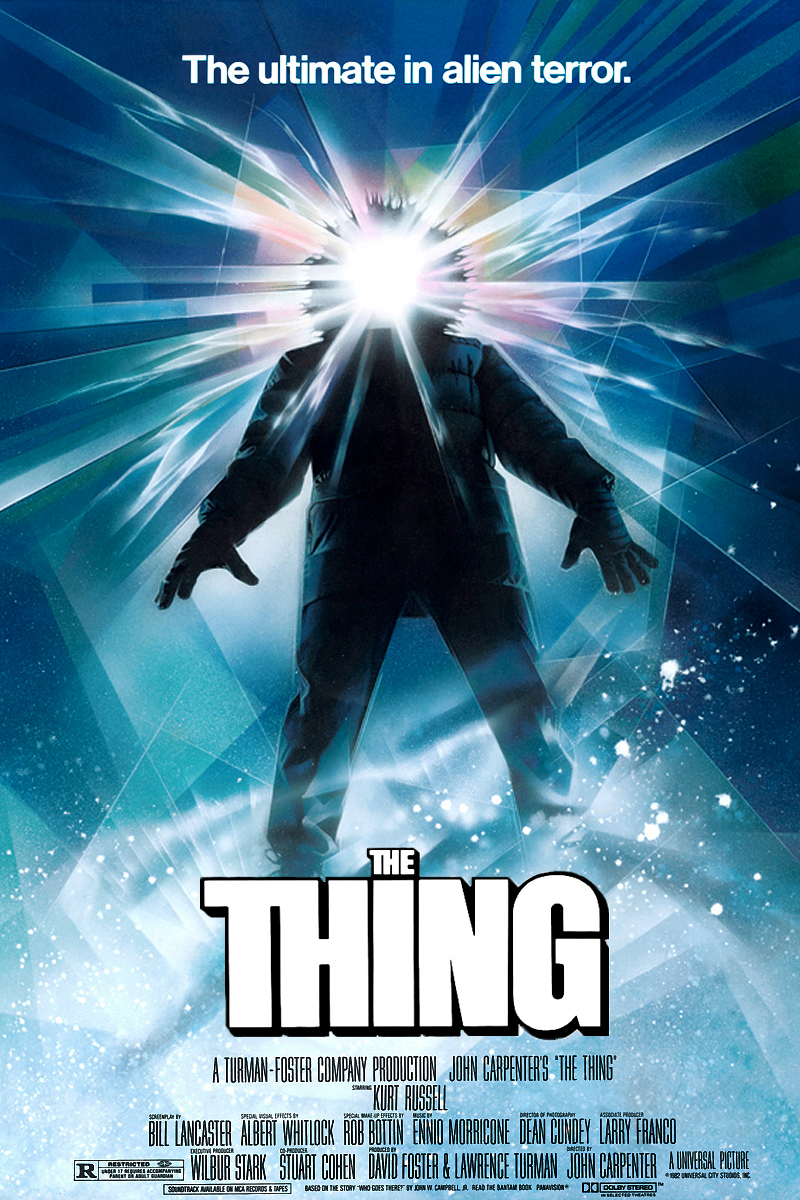
Image result for the thing 1982
Image source: https://vicsmovieden.com/2014/10/09/john-carpenters-the-thing-1982-lobby-cards/


Hey ladies and gentlemen!  Sorry about the lateness of this most recent film review but now is as good a time as any to release it considering its a bit late eh?  Kind of what happened between each version of this legendary film (The original The Thing being released in 1951, this one in 1982 and the 2nd remake coming in 2011).

Once again, as with the last film review on this blog, thanks a great deal to the University of Sussex sci-fi and horror society for giving me the chance to see this cinematic cult classic for the first time.

As with the 1951 original and the 2011 remake, John Carpenter's The Thing has a nicely simplistic plot that is delivered with gusto and skill, supplemented by a witty script and superb acting.  I mean...less so in the case of the 2011 remake because that one was about as disappointing as getting a book you've already got for Christmas.  But thankfully, the tone, story and narrative of this 1982 version is much more similar, in a good way, to that of the 1951 black and white classic. 

And speaking of that plot;  An observation team from the USA are holed up in their secluded but strangely cosy arctic observation post out in the arctic tundra when their duties and quiet are savagely and terrifyingly interrupted by an acid-spitting and shape shifting alien that picks off the crew one by one while disguising itself in order to spread chaos and allow itself to continue killing our heroes.   A simple plot to be sure and that's not necessarily a bad thing.

However, in order to make the plot not be an overly-simplistic dud, a story this simplistic would require at least a few aspects to be delivered to such a high level of quality and creativity that over-simplicity is either overshadowed or not a problem in the narrative.  Fortunately, that is something which is present in the final product of this movie in spades.  It is clear that legendary director John Carpenter knew what he was doing with this remake of the 1951 original The Thing From Another World and took some steps to learn from the pros and cons of that film.  Because of this, while Carpenter's 1982 version may lack the same level of regal class and iconic influence as the original, it supplements this vacancy with a witter script, generally less wooden directing and dialogue.  And not to forget, an ending that arguably trumps that of Christian Nyby's and Howard Hawks' original.  An ending that, I believe, is possibly among the very cream of the crop when it comes to tense and ambiguous endings to either horror or thriller movies.


Image result for the thing 1982
Image source: https://www.tumblr.com/search/richard%20a.%20dysart


And that ending isn't just a random gem in the film, its given a good foundation to base itself upon thanks to the sense of horror and tension throughout the film that is in no small part helped by the legendary practical effects of this movie.  If you are going to look into or study the history and art of practical effects in movies, this film must come up at some point because its ability to make you feel fear with expansive and gruesome models and practical gore is sublime.  The models and make up used to portray the gore are rightfully regarded as some of the best of the 20th century, especially the 1980s, and even more so considering the film's very minimal use of special effects.  The effectiveness of the models and make up is given even more effective muscle to work with because of how the colours of blood, gore and deformed corpses stands out against the white background of Antartica.  Add to this some scenes where the reveal of plot twists and horribly deformed corpses is hidden by mist, steam or smoke and you have a scenario where the practical effects are given as much of a chance to enhance Carpenter's theme of isolation, mystery, tension and gut-wrenching surprises.


Image result for the thing 1982
Image source: http://www.theaceblackblog.com/2012/05/movie-review-thing-1982.html


Perhaps the other aspect of the film that could rival the direction, script and practical effects in terms of enhancing the themes of the film is the talented cast on show.  A cast that easily has its jewel in the crown being a top-of-his-game Kurt Russell.  With a cast brimming with talent like Russell, Wilford Brimley, Keith David and Donald Moffat among several other big names, it'd be suprising if such a talented cast was not able to at least produce a competent collective performance.  Granted this can happen sometimes with certain films depending on circumstance, timing and poor directing or scripts. Thankfully, and once again in part thanks to Carpenter's top-class directing, we have a highly talented cast that are directed to the best of their capabilities and all supplemented by a script that fantastically slips from darkly witty to nail-bitingly tense.  Kurt Russell really is the star of the show though.  This isn't too surprising considering how talented the man is.  But, considering that he's just one man in a case of highly-respected and talented actors, some of whom, at the time, had far more experience, is a testament to how impressive his performance in this cinematic classic is.  His mixture of empathetic and ruggedly tough is a real trademark of Russell's acting, especially during the 1980s, but there is possibly no other greater example of this, at least outside of the Snake Plissken films, than John Carpenter's The Thing.


Image result for the thing 1982
Image source: https://www.themoviedb.org/movie/1091-the-thing/images/backdrops


To conclude, this is one of the greatest films of the 1980s and was able to make itself a cult classic very quickly despite being released in a year that was stacked with fantastic films being released.  There are a few weaknesses like how one or two instances of practical effects show their age and how not all of the dialogue really works but the pros far outweigh the cons in this case.  Furthermore, if you do not like horror or thriller films, I still recommend looking into how this film was made as that in of itself is an interesting tale of skill and creativity.  On top of this, I would still recommend seeing the film just for its star-studded cast and high-quality acting performances by everyone on board for the vast majority of the film's running time.  And hey, if you want any other reason to see this film I can think of a real golden one.  A BEARDED KURT RUSSELL FIGHTING A SHAPE-SHIFTING ALIEN WITH A FLAME THROWER.  Now THAT, is just one very big reason why I love action and thriller films from the 1980s.


Camerawork/Cinematography: 6.5/10
Directing: 8/10
Writing/script: 7/10
Acting: 8.15/10
Practical and special effects: 9/10

Overall rating: 38.65/50